Visar inlägg med etikett Animal kingdom. Visa alla inlägg

The New "Werewolf Cat" Highlights The Complicated Ethics of Breeding


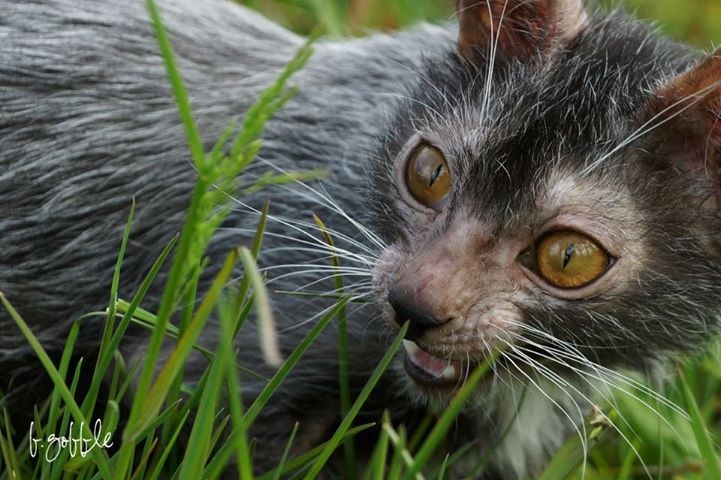
The Lykoi cat is a new breed, one that's only been around for a few years. The name is derived from the word "lycanthrope," because its patchy fur coverage makes it look kind of like a werewolf. At Nautilus Magazine, Ian Chant explains how it's all thanks to a genetic anomaly that affects hair growth.
Lykois bear a mutant gene variation that interferes with their hair growth, robbing the animals of much of their undercoat and leaving them with hair follicles that are either unable to produce hair at all, or that can produce it but not maintain it. While they do have hair, it is sparse, and often missing entirely around the face and paws, lending Lykois a lean, slightly mangy look, with eyes that, unhidden by fur, give the illusion of being much larger than normal.
"These are the result of a natural mutation that appeared in the wild cat population," says Johnny Gobble, a veterinarian and breeder of Lykois. "They've been reported for years, but no one has tried to breed them because there were concerns about their health." Though the cats don't project the image of a hale, hearty feline, the unusual variety has caught the interest of cat fanciers recently.
So far, it seems as if Lykois are faring decently, as long as they're kept inside where they can compensate for their lack of fur with artificial sources of warmth. But all the Lykois are still pretty young, and some health concerns might not become evidence until they mature.
Of course, it's not always health that humans are seeking in a new animal breed—often, it's novelty. Breeders look for very specific traits and do their level best to not only bring them out but hone them to their ultimate expression. Pug noses get flatter, corgi legs shorter, and bulldog shoulders so broad that the animals have to be delivered by cesarean section. Rather than being weeded out as they are in nature, these mutations in breeding are prized, preserved, emphasized, and multiplied at grand scales. At its heart, breeding animals represents the industrialization of mutations.


 (Source)

Adorable Sea Slug Loves Eating Algae So Much It Can Photosynthesize


Known as the Costasiella Kuroshimae also nicknamed "leaf sheep", this type of sea slug species is a shell-less cutie-pie that remains one of the only creatures in the world capable of using algae to photosynthesize.

When they consume algae they suck out the chloroplasts to store in their own bodies for energy using a process known as kleptoplasty. Usually only single-celled organisms are capable of this process but the leaf sheep is a special species that is literally a solar-powered slug.

(Source)

Blue German Shepherd


 I so badly want a blue gsd! I've fallen in love! And now I found blue babies in Sweden! OMG! And Alex has almost promised me that we can go and have a look at them when he comes home. I know, we can't have more animals now.. But is't a blue gsd!? They are so hard to come by.. If the parents are healhy and mentally stable I might have to steal one of them :O And hide it from Alex.. He won't notice....

Coyote finds old dog toy, acts like a puppy


 A photographer spotted a coyote as it trotted into her yard and explored a toy left in the snow. What she managed to capture on camera is the beauty of play.

(Source)


Cat Takes Accidental Ride On An Airplane


In a video posted on Sunday to YouTube (LINK), the pilot, Romain Jantot, and his passenger, don't notice the cat at first. Then, as she crawls toward them, they realize they've taken on an unwanted passenger.
Jantot immediately starts his descent after spotting the feline stowaway and safely lands the plane.

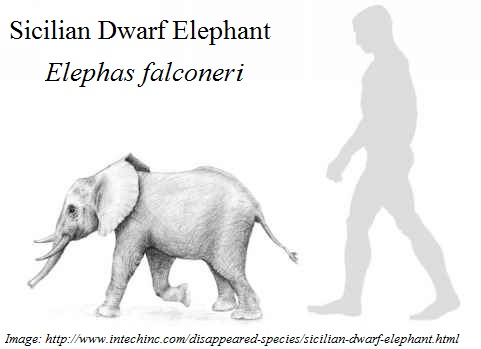
Pygme Elephant

Palaeoloxodon falconeri (also known as the Pygmy Elephant) is an extinct species of elephant 
that was an example of insular dwarfism, reaching only 90 cm (3 ft) in height. They lived on the islands of Sicily and Malta. 


(source)

Diving bell spider

 It is the only spider known to spend its whole life under water. As with other spiders, it breathes air, which it traps in a bubble held by hairs on its abdomen and legs. This gives it a silvery appearance, despite it being velvet-grey. The spider inhabits ponds in Europe and northern Asia, and lives for approximately two years.
Females build underwater "diving bellwebs which they fill with air and use for digesting prey, molting, mating and raising offspring. They live almost entirely within the bells, darting out to catch prey animals that touch the bell or the silk threads that anchor it. However, they have to surface occasionally to renew their personal air supplies and those of their webs. Males also build bells, but these are smaller and the males replenish their bells' oxygen supply less often. The males also have a more active hunting style. Prior to mating, the male constructs a diving bell adjacent to the female's, then spins a tunnel from his bell, breaking into hers to gain entrance. Mating then takes place in the female's bell. The female spider lays between 30 and 70 eggs in her bell.
Males are around 30% larger than females, which is unusual for spiders. This is possibly because their more active hunting style requires greater strength to overcome water resistance and counteract the buoyancy of their mobile air supplies. The larger body size is also associated with longer front legs, which has been shown to affect diving ability, giving the males superiority in diving over the more sessile females. The size of females may be limited as they put more energy into building and maintaining their larger bells. The spiders prey on aquatic insects and crustaceans. Their bite is quite painful as the fangs can pierce the skin, causing localised inflammation and feverishness. The spiders themselves fall prey to frogs and fish.
(Source)

Bald eagle "Beauty" gets beak prosthetic

 At the age of six years old, Beauty went through something horrific; a hunter shot her in the face and the upper part of her beak was destroyed. She was unable to clean herself or eat. A medic at Birds of Prey Northwest, Jane Cantwell, nursed Beauty back to health, but that wasn’t enough to ensure that she could survive. Cantwell began seeking advice from experts in her field but was told countless times that nothing could be done and her best option was to euthanize Beauty. That answer just wasn’t acceptable.
While teaching a seminar in Idaho, Cantwell met an audience member named Nate Calvin. Calvin, the founder of Kinetic Engineering Group, thought he might just have an answer to Beauty’s problem. Teamed with engineers, wildlife experts, and even a dentist, they constructed something remarkable. They worked together to create a replica of what Beauty’s beak should look like and took X-Rays of her head.
A 3-D printed prosthetic beak was made to replicate the real thing. And it worked. Beauty is now able to live like a normal eagle once more. She can preen herself, drink water, and eat- all things she couldn’t do after her life-altering injury.


Beauty and the Beak from Keith Bubach - Trooper Media on Vimeo.

(Source)